


You Can't Scale on a Hunch: Why Growing Businesses Need a Financial Roadmap

You Can't Scale on a Hunch: Why Growing Businesses Need a Financial Roadmap
There's a version of your business that exists in your head.
You know roughly what's coming in this month. You have a sense of whether you can afford to take on another member of staff. You've got a feel for whether the business is doing well or just looks like it's doing well because the bank account hasn't alarmed you recently.
And for a long time, that version in your head has been good enough.
But something happens when you start growing a business past ten, fifteen, twenty people: the gap between what you think is happening and what is actually happening gets wider. The decisions get bigger. The consequences of getting it wrong get more expensive. And the instinct that carried you through the early years starts to feel, if you're honest, a little less reliable than it used to.
If any of that sounds familiar, you’re in the right place, and definitely not alone. It's one of the most common patterns I see in growing SMEs, and there's a straightforward reason for it.
You've outgrown your financial roadmap. Or more accurately, you've outgrown the absence of one.
Why gut feel stops working at scale
When your business was smaller, the numbers were simpler. Fewer people, fewer costs, fewer moving parts. You could hold most of it in your head because most of it fitted there.
At five or six people, your financial intuition is pretty well calibrated. You know your highest costs because there aren't that many of them. You know your key clients because you speak to most of them yourself. You know whether a month has been good or bad because you can feel it.
At fifteen or twenty people, that same intuition is working from incomplete information, and it doesn't always know it.
There are salary costs you've almost stopped noticing because they come out automatically. Subscriptions and software licences have accumulated over time. Project costs that sit in the business for weeks before they show up anywhere visible. There are clients whose profitability you'd struggle to calculate without sitting down with a spreadsheet for an hour.
The business isn’t in trouble; it’s just a lot bigger than it was, and bigger businesses need more than a feel for the numbers. They need a forward-looking picture of where those numbers are going.
Because the other thing that changes as you grow isn't just the complexity of your finances. It's the size of the decisions you're being asked to make.
Hiring someone at five people is a big deal, but if it goes wrong, the business can usually absorb it. Hiring three or four people at twenty people, when you're not sure your revenue pipeline is strong enough to support the increased payroll for the next six months, or what will happen if you lose a client… that's a different kind of risk entirely.
The margin for error shrinks. The stakes get higher. And the cost of a wrong call, made on instinct, goes up.
The external environment is tightening, and most business owners haven't noticed… yet
We’ve all felt the pinch of increased costs recently… let’s not get started on fuel prices!
Something to think about is that even if your revenue stays exactly the same this year, the cost of running your business is almost certainly going up.
The Autumn Budget didn't make the front page for businesses like yours, but the detail matters. Personal tax thresholds are now frozen until 2031, which means fiscal drag will push many people into higher tax brackets without any increase in what they're earning. If you're a director drawing dividends, the tax rate on those dividends has now risen so that a company owner taking £40,000 in dividends a year is looking at roughly £800 more in annual tax.
On top of that, the writing-down allowance for plant and machinery has now reduced. So if you're in manufacturing or running a tech business that invests in equipment, the tax relief you've been factoring into your capital expenditure plans is about to change.
None of these is catastrophic in isolation, but together, they represent a gradual erosion of margin that a business running on gut feel simply won't see coming. Why? Because gut feel and reviewing last year's accounts are backwards-looking and won’t account for what's changing around you.
Looking forward is precisely what a financial roadmap is for, and it can be the difference between a thriving business and, at best, a struggling one, at worst… closure.
What is a financial roadmap?
Let's clear something up, because the phrase "financial roadmap" can conjure images of complicated spreadsheets and rooms full of accountants. It doesn't have to be either of those things.
At its heart, a financial roadmap is just the difference between looking backwards and looking forward.
Most SMEs are great at looking backwards. They have monthly accounts, can tell you what revenue was last quarter, and can produce a profit and loss report. That's all useful, and it matters, but it's history. It tells you where you've been, not where you're going.
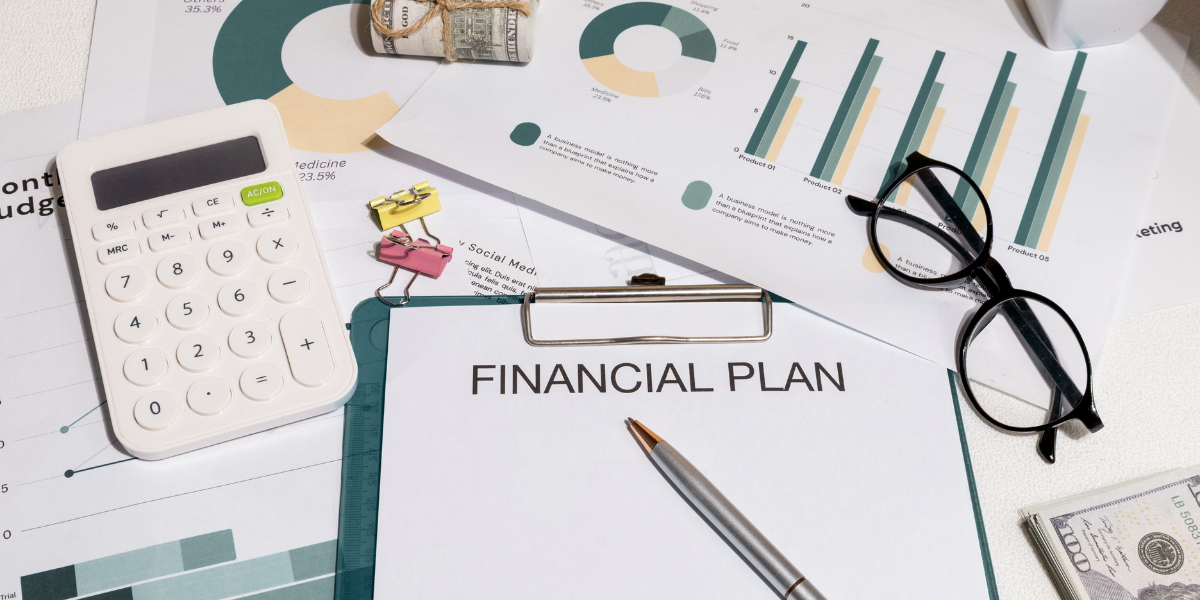
A financial roadmap looks forward. It takes what you know about your business, your revenue pipeline, your cost base, your growth plans, and uses that to build a rolling picture of where things are heading over the next three, six, and twelve months. It includes a budget: a clear plan for what you're going to spend and why, with a benchmark to measure actual performance against. And it includes forecasting: an updated, living view of what your revenue, costs and cash position are likely to look like as circumstances change.
Done well, it isn't a document you produce once and file away. It's something you refer to regularly. It's the thing that sits behind a hiring decision, an investment, a new service line. It's what turns "I think we can afford this" into "here's what the numbers say." If it were a book, it would be dog-eared and stuffed with page markers from so much use.
That distinction matters more than you might realise.
What changes when you have one
Picture two businesses. Same sector, similar size, similar revenue. Both have a good product and a capable team.
The first business is run by an owner who has a strong feel for the numbers. He knows roughly what's in the bank, has a sense of whether revenue is trending in the right direction, and makes decisions when they feel right. Most of the time, this works fine.
The second business has a financial roadmap. The owner knows what her revenue needs to look like over the next six months to support the two hires she's planning. She knows when a cash squeeze is coming because her rolling forecast flagged it eight weeks ago, and she's already taken steps to manage it. She knew about the dividend changes when they were first announced and had already reviewed how she would be drawing income from the business before the new tax year.
When an opportunity comes up, a contract that would significantly increase her workload and require upfront investment, she doesn't have to sit with the anxiety of not knowing whether she can take it on. She runs the numbers, sees what it means for cash flow, and makes a decision in a day.
The first business owner takes three weeks to make the same decision, misses the window, and goes back to running on instinct.
This is what a financial roadmap changes. Not just the numbers, the speed and confidence of the decisions you make with them.
No more firefighting, instead of reacting to what's already happened, you start positioning for what's coming. The business feels less like something happening to you and more like something you're in control of.
Why most growing SMEs don't have one
If a financial roadmap is this valuable, why don't more businesses have one?
The honest answer is usually one of three things.
The first is time. Business owners at this stage genuinely pushed for time. The idea of sitting down to build a budget or a rolling forecast feels like something to do when things quieten down, which of course they never do.
The second is complexity. It feels like something that requires specialist knowledge, complicated software, or more financial sophistication than the business currently has. It gets filed under "things we should probably do at some point" and stays there.
The third, and this is the one that's really worth being objective about, is that it's sitting with the wrong person.
Many businesses at this stage have a bookkeeper, or an office manager who has taken on the finance function, or a junior team member who keeps the records straight. They're good at what they do, but what they do is record what has already happened. They reconcile the bank, process the invoices, and keep the accounts tidy. Brilliant.
What they don't do, and were never asked to do, is look ahead. They don't build forecasts. They don't model the financial implications of a hiring decision or a new client contract. They don't sit with the business owner and say, "Here's what the numbers are telling us, and here's what you should be thinking about."
That higher-level thinking is a different discipline entirely. And the absence of it, the gap between solid bookkeeping and genuine financial leadership, is where most growing businesses are operating right now.
The roadmap you need isn't complicated, but it is needed
The good news is that getting a financial roadmap in place doesn't require a full-time finance director, a significant technology investment, or months of preparation.
What it requires is someone with the expertise to build it, the commercial awareness to make it valuable, and the ongoing involvement to keep it useful as the business changes.
That's where a fractional finance director comes in. Not an accountant who visits once a year to do your tax return or a bookkeeper who keeps the records straight. Someone who sits alongside you in the business, understands what you're trying to build, and makes sure the financial picture you're working from is accurate, forward-looking, and genuinely useful for the decisions you're making.
The businesses that scale with confidence aren't necessarily the ones with the biggest revenues or the best products. They're the ones that can see what's coming, plan for it, and make decisions quickly when the moment arrives.
Running on instinct got you here, but a financial roadmap is what gets you to the next stage.
If you're not sure what yours should look like, or whether you have one already, that's a pretty good sign that it's time to find out.
© All 2025 All rights reserved. Website Design by Peak Media Marketing